Need Waterproofing Help? Call: (860) 875-6646
Radon rarely comes up when homeowners talk to a waterproofing contractor. It's more of a conversation people have with a home inspector, or maybe after cracking open a test kit from the hardware store. But the two problems are more connected than most people realize, and fixing one often helps the other, too.
Radon moves from the soil beneath a home into the living space through cracks, joints, and openings in the foundation. Those are, kind of, the exact same openings water uses when a basement has a moisture problem.
Understanding that overlap helps explain why foundation sealing isn't just a waterproofing measure, it also cuts off the pathways radon uses to get in. That's really why professional waterproofing services are worth looking into, since they end up protecting your home on two fronts at once.
Radon is a colorless, odorless radioactive gas that forms naturally when uranium in soil and rock breaks down. It rises from the ground and tends to collect in the lowest enclosed space of a structure, which for most homes is the basement.
From there, it moves upward into the rooms above. The U.S. Environmental Protection Agency identifies it as the second leading cause of lung cancer in the country after cigarette smoking, and the risk comes from long-term exposure at elevated concentrations.
Connecticut doesn't have the dramatically elevated radon levels found in parts of Pennsylvania or the upper Midwest, but elevated readings appear regularly across the state, including in Hartford County.
Two homes on the same street can produce quite different test results because local geology varies considerably, which is part of why understanding the different types of waterproofing systems matters before deciding on a plan.
The EPA recommends taking action when levels reach 4 picocuries per liter and considers mitigation at 2 picocuries per liter and above. The only way to know what's happening in your home is to test, and once you have results, knowing how radon is getting in determines what to do about it.
Radon doesn't need a large crack to enter. It moves through small fissures in foundation walls, through the joint where the floor slab meets the foundation, through construction seams where concrete was poured in separate stages, and through gaps around utility pipes penetrating the slab.
Sump pits with open or loosely covered openings also create a direct path between the soil below and the basement air. None of these require dramatic structural failure. They're the small, ordinary gaps that most older basements have in some form.
The reason this matters for waterproofing is that these are the exact same vulnerabilities water exploits. A crack in a poured concrete wall that lets groundwater seep through after a heavy rain is also a pathway for soil gas when pressure conditions favor it, which is exactly the kind of issue our wall cracks and seams repair services are built to address.
The floor-wall joint that produces seepage from hydrostatic pressure is also a radon entry route. Homes that haven't had foundation work done tend to have both problems at once, and addressing the foundation closes both routes at the same time.
Where Our Work Overlaps With Radon Reduction
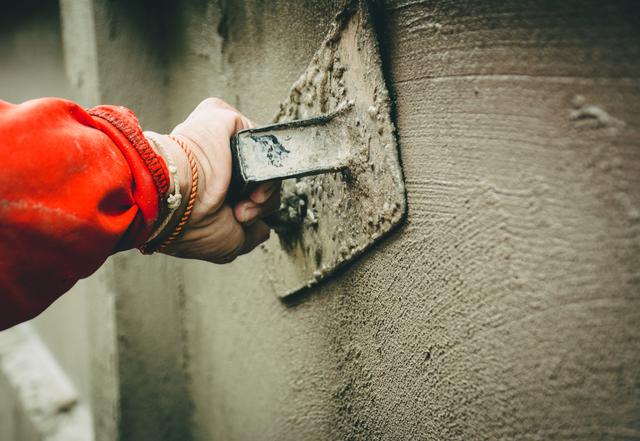
Our work at Eastern Waterproofing Co., Inc. isn't marketed as radon prevention, but what we do closes many of the same pathways radon uses to enter a home. Crack injection, which we use to seal active or structural cracks in poured concrete walls, bonds material into the crack under pressure and closes it permanently.
That crack no longer works as a water entry point, and it no longer works as a radon entry point either. This is exactly the kind of work where it pays to hire a professional rather than rely on a surface patch.
Sealing the floor-wall joint as part of a drainage system installation eliminates one of the most consistently underaddressed radon entry routes in residential basements.
Wall coatings on block foundations reduce the surface area through which gases can migrate. Concrete block is porous, and the hollow cores in block walls can accumulate soil gas from the surrounding soil before it moves through mortar joints into the basement air. Treating the wall surface reduces that migration.
None of this replaces a dedicated radon mitigation system, but it reduces the number of pathways a mitigation system has to compensate for.
Curious whether your Manchester home's foundation cracks could be letting in more than just water? Give us a call at (860) 875-6646, and we'll take a look at what's really going on.
When a crack in a foundation wall is properly sealed, the pathway closes. We use epoxy injection for structural cracks where the goal is to bond and restore the wall. We use polyurethane for cracks that are taking in water, since it expands on contact with moisture and fills the gap from within.
Either way, the result is a gap that no longer passes water and no longer passes soil gas. The same logic applies to the floor-wall joint. An open joint invites both. A properly closed joint as part of a drainage installation addresses both at once.
Block foundations need a bit more consideration. The hollow cores in concrete block can collect radon from surrounding soil before it migrates into the basement air through mortar joints and block faces.
Waterproofing treatments on block walls reduce the surface through which that gas can move, though they won't stop all transmission through a block structure. For homeowners with block construction and elevated radon readings, foundation sealing is one piece of a broader plan that typically includes a dedicated mitigation system as well.
Foundation sealing reduces radon entry points, but it doesn't replace a full mitigation system when levels are elevated. Sub-slab depressurization, which draws air from beneath the slab and vents it outside before it can enter the home, is the most reliable way to bring levels into a safe range.
A certified radon mitigation contractor handles that work specifically, and if test results come back above the action level, that's the right next call to make.
What waterproofing contributes is a reduction in the number of openings a mitigation system has to overcome. A home with sealed cracks, a closed floor-wall joint, and treated block walls gives a mitigation system a much better starting point.
A home with open cracks and an unaddressed floor-wall joint keeps feeding radon through new pathways regardless of how well the ventilation system runs. If moisture and radon are both concerns in your home, addressing the foundation first makes the mitigation work more effective and more durable over time.
If you've noticed moisture, cracking, or seepage in your basement and want an honest read on what's happening with your foundation, call us at (860) 875-6646 or schedule a free estimate today.
Related Topics: