Need Waterproofing Help? Call: (860) 875-6646
Manchester, CT gets its share of serious rain. Spring snowmelt alone can saturate the ground for weeks, and the heavy storms that move through Hartford County in summer can overwhelm drainage systems that were holding up fine the rest of the year. For homeowners who've already dealt with water in the basement, the question isn't whether it can happen again. It's what to do to make sure it doesn't.
Preventing that is the point of family-owned waterproofing services in Manchester, CT, and at Eastern Waterproofing Co., Inc. we've been at it since 1976. The tips below reflect 50 years of field experience with the conditions that drive basement flooding in this area.
None of what follows is generic advice that applies to any house in any state. These are the things that matter most based on what we find, basement by basement, in the Manchester area and across Hartford County.
This is where most basement flooding problems get mishandled, and it matters more than anything else on this list. Water on the basement floor is not a self-explanatory problem. It might be coming up from below through hydrostatic pressure in the soil beneath the slab. It might be running through a crack in the foundation wall. It might be entering through a failed hatchway seal or a clogged window well drain. Each of those sources looks similar once the water is on the floor, but each one requires a completely different repair.
Hydrostatic pressure is the most common driver of floor seepage in Manchester homes. Groundwater builds up in the saturated clay soil beneath the slab and pushes upward through the floor-wall joint or through cracks in the concrete. That's not a wall problem, and painting the walls or applying a surface coating won't stop it. Matching the repair to the actual source is what separates a fix that holds from one that doesn't. If you're not sure where the water is coming from, noting exactly when it appears (during rain, after rain, only in spring), where it pools, and whether it's localized or running along the full perimeter will help whoever assesses the job give you a more accurate answer.
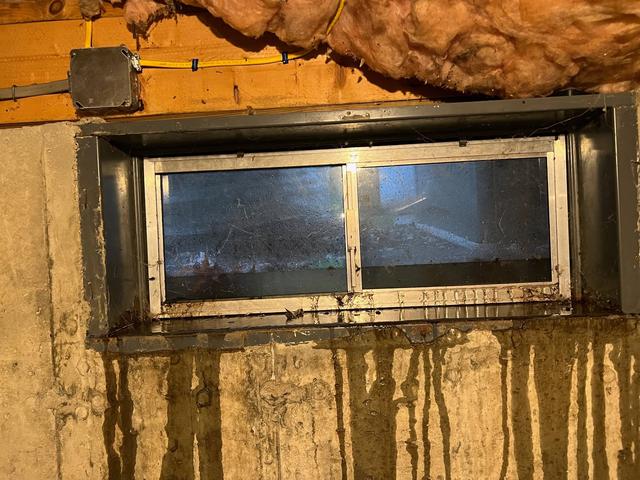
These three spots send water into more Manchester basements than most homeowners realize, and they get overlooked in most waterproofing conversations because they're not the main foundation walls. A hatchway that looks structurally sound from the outside may be leaking through the seal between the frame and the foundation masonry, through inadequate drainage at the base of the enclosure, or through a door that's warped and no longer weather-tight. Any one of those conditions sends water in during rain, and the entry point often isn't obvious from inside the basement.
Window wells run into the same kind of trouble. When the drainage at the base of the well gets clogged with leaves and debris, water builds up against the window and enters through the frame or the surrounding masonry. Chimney cleanout areas in the basement are the easiest to miss entirely. The porous masonry blocks around a basement chimney allow groundwater to move through steadily, and the dampness that results at the chimney base can look like a completely unrelated problem. We check all three of these on every assessment because leaving them unaddressed while fixing the main walls results in a basement that's still taking on water from a different direction.
Connecticut's freeze-thaw cycle does consistent damage to existing foundation cracks. Water enters a crack, freezes in winter, expands, and widens the gap slightly. After that process repeats itself for a few years, a crack that was a minor seep becomes a reliable water entry point. The right time to address a crack is before another winter, not after it.
The repair method depends on the crack. Active leaks through poured concrete walls respond well to polyurethane injection, a process where the material is injected under pressure and expands on contact with moisture to fill the crack from the inside. Cracks that have compromised the wall structurally, particularly horizontal cracks caused by lateral soil pressure, need epoxy injection to restore the bond across the crack face. Surface patches, hydraulic cement, and paint-on sealers rarely hold in a Connecticut foundation for more than a season or two. They address the outside of the crack without penetrating it, and the same conditions that created the crack will reopen it.
If your Manchester home already has an interior drainage system and a sump pump, that's a good starting point. It's not a guarantee. Drainage systems can clog, age past their effective life, or fail quietly in ways that only become obvious when a major rain event hits. A system that isn't working properly offers false confidence right up until the moment you need it most.
The sump pump is the first thing to check. Pour water into the sump pit and confirm that the pump activates, runs cleanly, and discharges water out through the line. Do this before storm season, not during it. The drainage pipe itself can also clog with silt over time, particularly in older systems that were installed without filter fabric around the pipe. If your system has been in place for 10 or more years without inspection, it's worth having someone take a look.
We also see homes where the system that was installed is an above-floor channel or track rather than a below-floor perforated pipe system. If yours sits on top of the floor rather than beneath it, it's collecting water after it enters rather than intercepting the groundwater pressure beneath the slab. Interior drainage systems in Manchester homes only lower the water table when the pipe sits below it. Those are different functions, and for floor seepage problems, only one of them addresses the cause.
Interior waterproofing handles water that's reached or entered the foundation. It doesn't control what happens on the surface before the water gets there. If the grade around your house slopes toward the foundation rather than away from it, every rain event sends surface water in the direction of your basement wall. Downspouts that discharge at the base of the foundation concentrate roof runoff at the exact point you're trying to keep dry. None of that changes what your drainage system can do once the water arrives, but it does mean the system is working harder than it needs to every time it rains.
The soil around a foundation should slope away from the house. The standard is six inches of drop over the first ten feet. If that slope has reversed over years of soil settlement, surface water drains toward the wall rather than away from it. Downspout extensions that carry discharge at least four feet from the foundation reduce the surface water load.
Neither of these replaces a properly installed drainage system, but both can undermine one if they're left unaddressed. We mention this in most of our assessments because it's one of the more common reasons a previously waterproofed basement starts taking on water again.
Every other item on this list is more useful when you know what you're dealing with. An assessment from someone who is there to diagnose rather than sell is the starting point of a waterproofing plan that holds. That means an owner or a licensed contractor, not a commissioned rep following a script.
Jon Piela, our owner, personally evaluates every job. He carries a Connecticut P7 Plumber license and a WRT certification, and the assessment he provides comes before any discussion of price or scope. If a simple crack injection will solve the problem, that's what he recommends. If a full interior drainage system is warranted by what he finds on-site, he explains specifically why, based on what's happening in your basement.
We've been doing this since 1976, and the approach of diagnosing before recommending hasn't changed because it's what produces repairs that keep basements dry. Call (860) 875-6646 or request an estimate, and Jon will tell you where the water is getting into your Manchester basement before anyone talks about a system.
Related Topics: