Need Waterproofing Help? Call: (860) 875-6646
Most water damage in Manchester homes starts where nobody inspects. A chimney cleanout wicking groundwater through porous block. A window well whose drain silted up years ago. A hatchway frame that quietly lost its seal. We have worked as a waterproofing contractor in Manchester, CT since 1976, and our owner still walks every job himself. He does that before anyone talks about price, because a repair only holds when the diagnosis comes first. Go stand in front of the wall above your wet floor and put your hand on it. If that wall is dry, the water did not come through it.
Dampness without a drip confuses homeowners more than any other symptom. It usually traces back to one of three causes. Warm air meets a cold masonry wall and condenses on the surface, which happens far more in July than in March. Moisture can also wick through the concrete itself by capillary action, arriving with no pressure behind it. Or seepage runs so slowly that it evaporates before it can pool.
That last case leaves a chalky white residue worth learning to recognize. It is called efflorescence, and it forms when water travels through masonry and evaporates on the inside face. A wall showing efflorescence is telling you water is moving through it now. Surface treatment has a place here. For moisture sitting on the surface of the wall, a well-matched approach to dampness and wall coatings has a real place. What a coating cannot do is hold back seepage still arriving from behind the wall. We confirm what is happening back there before recommending one.
Water rarely picks the route a homeowner expects. Foundations get inspected, and cracks get photographed, while the actual culprit sits outside in the rain. Hatchways fail at three separate points. One is the joint where the frame meets the foundation; another is the drainage at the base of the enclosure. The third is the door itself, once age has warped it. Fixing one of the three and calling it done explains most repeat flooding.
Window wells fail differently. The drain at the base clogs with leaf litter, or it was never sized properly to begin with. The well becomes a bucket that fills every storm until water finds the window frame. Chimneys are quieter still. Block around a lower-level chimney is porous by nature, so groundwater migrates through it. The water then shows up at the chimney base inside. None of these look like foundation problems, which is why they survive so many inspections.
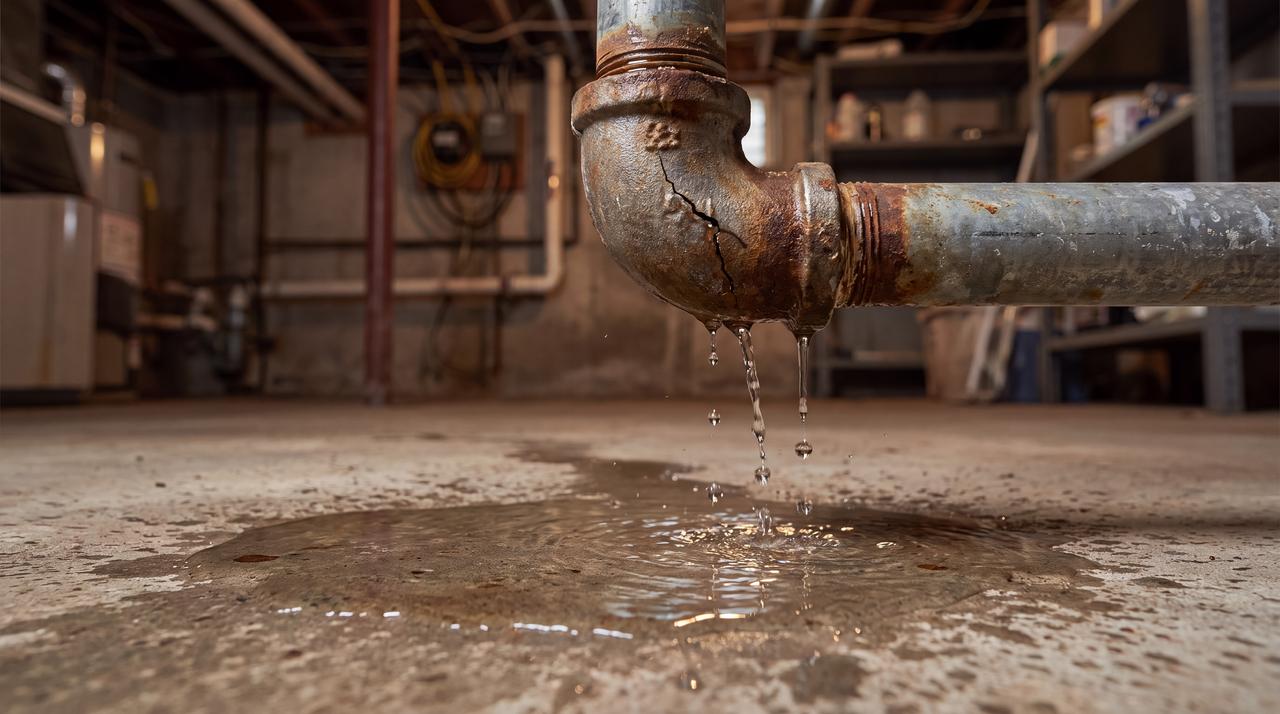
Check these before you assume the foundation is at fault:
Water appearing along the joint where the floor meets the wall comes from underneath. Groundwater in saturated soil has nowhere to drain, so it builds pressure and pushes up through the slab. That is hydrostatic pressure. Treating it as a wall problem wastes money without changing the outcome. The test is the one we run on site, and any homeowner can run it first. Check the wall above the wet area. A dry wall above a wet floor rules out a wall leak.
The correct repair lowers the water table beneath the slab rather than collecting water after it arrives. That means a four-inch perforated pipe set below the floor next to the footing, encased in washed stone with filter fabric. A properly sized pump handles the rest. An average sump pump moves roughly 3,000 gallons an hour, about what a standard oil truck holds. Very few residential basements take on that much in an hour. If somebody proposes two pumps, ask them to put the reason in writing. The track or curb system mounted on top of the floor deserves a flag too. It catches water that already entered and leaves the water table exactly where it was. We wrote about what causes water seepage in basements separately if you want the longer version.
Much of the housing stock around here sits on clay-heavy soil. That soil drains slowly and holds water against a foundation long after the storm passes. Freeze and thaw cycles run several times a winter in this part of Connecticut. The soil expands and contracts against masonry that was never designed to flex. Homes built between the 1950s and the 1990s often still have their original perimeter drainage. Much of it stopped working years ago, quietly, until a wet spring made it obvious.
Construction practice from that era plays into it. Foundations poured in two stages left a horizontal cold pour seam where the pours met. That bond is weaker than the concrete on either side of it. Backfill was frequently whatever came out of the hole, including coarse material that traps water against the wall. None of this means a home is defective. It means conditions changed over fifty years while the drainage stayed the same. That gap is where most of the water damage we find actually lives.
Not sure which of these is behind your wet basement? Give us a call at (860) 875-6646, and our owner will come out, look at the actual conditions, and tell you what’s causing the water before any number gets discussed.
The distinction decides the repair, so spend ten minutes on it before calling anyone. Press a paper towel against the wall and leave it an hour. Damp paper points to moisture arriving through the masonry. Dry paper against a stained wall usually means the staining is historic. Then track the timing. Water that shows up within a day of rain behaves very differently from dampness sitting there through a dry month.
Smell carries information too. A persistent musty odor with no visible water means moisture is present somewhere consistently. Often it sits behind finished walls where nobody can see it. That is also where mold gets its start. Drying the space without finding the source only postpones the problem. We covered why mold prevention matters during waterproofing in more detail. The order of drying and repair changes the result more than homeowners expect.
Ask who is doing the estimate, and take the answer seriously. A commissioned salesperson is trained to close a sale. A licensed tradesperson is trained to find a cause. Those are different jobs producing different recommendations. It explains much of why one basement draws wildly different quotes across Connecticut. Ask for the cause in plain terms, not the product. "You need a drainage system" is a proposal. "Water is entering at the floor and wall joint from hydrostatic pressure" is a diagnosis.
Then ask whether the scope is the minimum that solves the problem or the maximum the house could absorb. A single crack repair should not become a full perimeter system when that crack is the only source. Ask how long the company has operated locally. A guarantee is only worth what the company behind it will still be worth in ten years. We have operated continuously since 1976, under the same family, now in its third generation. Our crews average more than twelve years with us. Ask any contractor you are considering for the same two numbers.
What causes water to come in through the basement floor?
Water entering at floor level is almost always hydrostatic pressure. Groundwater pushes up through the soil beneath the slab. It is a different problem from a wall leak, and it needs drainage below the floor rather than a surface patch. Check the wall above the wet area first. If that wall is dry, the water came from below.
My basement walls are damp, but there is no visible leak. What is happening?
Three causes account for most of it. Condensation forms where warm air meets a cold wall, capillary moisture wicks through the masonry itself, or seepage arrives too slowly to pool. The cause decides the fix. A wall coating handles surface moisture, but the drainage source has to be found first if seepage is involved.
Why does my hatchway keep flooding after it was already repaired?
Hatchways fail at three points. The frame seal where it meets the foundation, the drainage at the base of the enclosure, and the door itself. Repairing one while the other two stay open is the usual reason water returns. We inspect all three and repair the specific source rather than applying one fix everywhere.
Can a chimney really cause a wet basement?
Yes, and it is one of the more frequently missed sources. Block around a lower level chimney is porous. Groundwater migrates through it and appears at the chimney base inside. The water looks like it came from the floor or the nearby wall. That is why it so often gets written off as general seepage.
Do I need one sump pump or two?
One pump handles roughly 3,000 gallons an hour. That covers what a residential basement realistically takes on, so two pumps are rarely necessary. If a contractor recommends a second one, ask for the specific conditions in your home that require it. Get that answer in writing before you agree to pay for it.
If your basement shows any of the signs above, we will find the cause before quoting anything. Our owner handles the evaluation personally. You get a written estimate the same day, and our in house crew does the work. No commissions, no franchise fees, no pressure to decide on the spot.
Call Us: (860) 875-6646
Email Us:
Visit Us: Our office is located at 199 Adams St., Manchester, CT 06042
Business Hours: Monday to Friday, 8:00 AM to 4:00 PM
For your convenience, you can also contact us via our online form. At Eastern Waterproofing, we value your privacy. Rest assured, we do not sell or share your contact information with third parties.
Related Topics: