Need Waterproofing Help? Call: (860) 875-6646
When deciding between epoxy and polyurethane crack injection, understanding their differences is crucial for selecting the best solution for waterproofing services in South Windsor, CT. Epoxy offers rigidity, strength, and strong adhesion, while polyurethane provides flexibility, resistance to movement, and chemical protection. The application process for both involves cleaning cracks, installing ports, and precise material mixing. Temperature affects curing times significantly - polyurethane sets faster than epoxy. Your choice depends on your specific project needs and crack repair requirements.
The chemical composition of epoxy and polyurethane materials plays a significant role in their performance for crack injection. Epoxy typically consists of two components: a resin and a hardener, which, when mixed, react to form a rigid, durable substance. Epoxy resins are known for their high strength, adhesion properties, and excellent performance in structural repairs. On the other hand, polyurethane materials are single-component compounds that react with moisture in the crack, expanding to form a flexible seal. Polyurethane is particularly valued for its ability to adapt to slight movements in concrete, ensuring long-term sealing without compromising performance. Understanding these chemical differences is key to selecting the right material for your crack injection needs.
Polyurethane is a flexible, water-reactive foam primarily used to stop active leaks and waterproof, while epoxy is a rigid, high-strength resin suited for structural repairs and stable cracks. Epoxy bonds concrete better than its original strength, making it ideal for restoring structural integrity. Here’s a breakdown of their pros and cons:
Polyurethane Injection
Pros:
Cons:
Epoxy Injection
Pros:
Cons:
How to Choose
Flexibility and durability are essential factors in determining the effectiveness of crack injection materials. Polyurethane is more flexible than epoxy, making it ideal for cracks that experience slight shifts or movements in the concrete. Its ability to adapt to these movements helps prevent cracks from recurring. Furthermore, polyurethane is highly resistant to chemicals, weathering, and abrasion, ensuring a long-lasting repair. In comparison, while epoxy is durable, it is less flexible and may not be the best option for areas subject to significant movement or vibration.
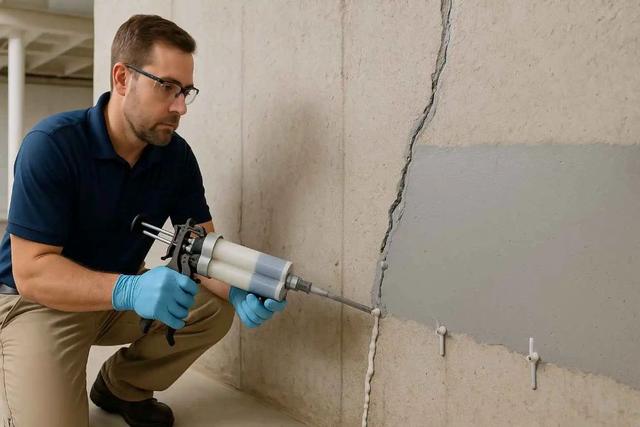
Successful crack injection depends on proper surface preparation to ensure material penetration and adhesion. Before injection, the crack must be thoroughly cleaned to remove any debris, dust, or contaminants that could impede the bond. Once cleaned, the crack's width and depth are inspected to determine the correct injection ports and material. The injection ports are then installed at regular intervals along the crack. After port installation, the crack injection material, whether epoxy or polyurethane, is mixed according to the manufacturer's instructions and injected into the ports using a specialized pump until the crack is filled.
Various factors, such as temperature and humidity, influence the setting time and cure rate. Warmer temperatures typically speed up the setting and curing process, while cooler temperatures slow it down. Polyurethane tends to cure faster than epoxy, partly because its chemical composition reacts with moisture in cracks, expanding and filling the space. Epoxy's cure time is more dependent on the proper mix ratio and temperature. Considering these factors will ensure the best results and a more efficient crack repair process.
Bond strength is a critical factor when evaluating crack injection materials. Epoxy offers a higher bond strength than polyurethane due to its chemical structure, which forms covalent bonds with concrete. The low viscosity of epoxy allows it to penetrate deeply into cracks, forming a strong, durable bond. Polyurethane, on the other hand, relies on mechanical adhesion, which, while effective, generally does not achieve the same level of bond strength as epoxy. When selecting a material, it’s important to consider the specific repair requirements to ensure the best possible bond strength and long-term effectiveness.
When comparing epoxy and polyurethane crack injection, it's essential to evaluate cost-effectiveness and suitability based on your project's needs. Here are some key factors to consider:
By considering these factors, you can make an informed decision that best meets your specific needs and ensures the repair's effectiveness.
We're here to assist you with all your waterproofing and drainage needs. Whether you're dealing with basement dampness, crumbling concrete, or window well leaks, our experienced team is ready to help.
Call Us: (860) 875-6646
Email Us:
Visit Us: Our office is located at 199 Adams St, Manchester, CT 06042
Business Hours: Monday to Friday: 7:00 AM – 4:00 PM
Online Form: For your convenience, you can also contact us via our online form.
At Eastern Waterproofing, we value your privacy. Rest assured, we do not sell or share your contact information with third parties.
Related Topics: